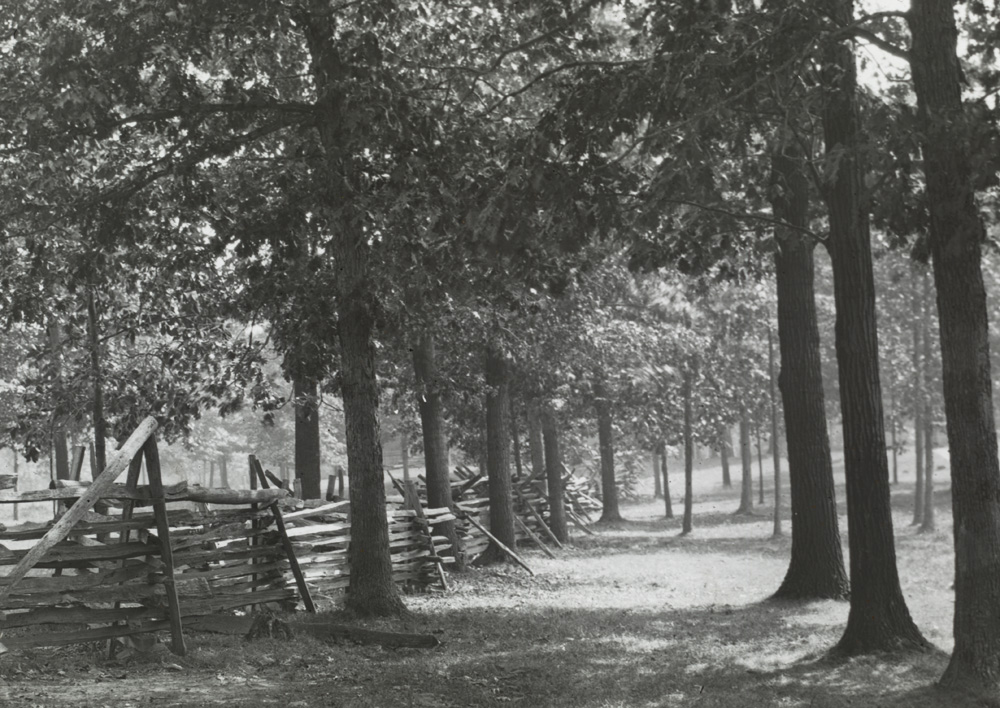
Stockade-type Fence & Trees, circa 1904
1 2021-03-02T09:46:21-06:00 Kate Flynn 89ab0aeaf9441ebcfe2d9d020d3b00b0ffd82873 13 6 Members of the forest preserve movement recognized that Cook County would continue to grow at a rapid pace, encroaching the forests. Perkins and his friends believed that the establishment of forest preserves would allow for a balance between population expansion and much-needed natural space. Forest Preserve District of Cook County records (MSFPDC09), FPDCC_00_01_0001_024, box 0-1-1, item 24, Special Collections & University Archives, University of Illinois Chicago Library. plain 2023-09-15T15:26:20-05:00 Dan Harper eff3db32ed95b3efe91d381826e2c10c145cd452This page is referenced by:
-
1
2021-01-19T15:56:25-06:00
Conservation
15
plain
2023-10-06T13:36:14-05:00
The Municipal Science Club, founded in 1899, led the lobbying efforts for an outer parks system. Most of the club’s members lived in Chicago and had connections with City Hall. Whereas other urban reformers, like Jane Addams, had a rocky relationship with local politicians, the members of the Municipal Science Club enjoyed a positive relationship with city leaders. In November 1899, at the direction of the City Council, the Municipal Science Club undertook a study of parks and playgrounds for Chicago. Renamed the Special Parks Commission, by 1901 the club submitted annual reports on the state of recreational space in the city. Over the next two years, members of the committee snapped photographs of urban and rural recreational spaces, created maps and charts that depicted existing and proposed parks, and compiled the latest research on the relationship between public health and the availability of park space.
The culmination of their research was the publication in January 1905 of the Report of the Special Park Commission to the City Council of Chicago on the Subject of A Metropolitan Park System, often referred to simply as the Metropolitan Park Report.
Dwight Perkins and Jens Jensen, the two members of the commission chiefly responsible for compiling the report, stressed the importance of preserving land for future generations:Instead of acquiring space only, the opportunity exists for preserving country naturally beautiful....[A]ll these [lands] should be preserved for the benefit of the public in both the city and its suburbs and for their own beauty and scientific value which, if once lost, cannot be restored for generations. Another reason for acquiring these outer areas is the necessity for providing for the future population.