Loyalty in Politics
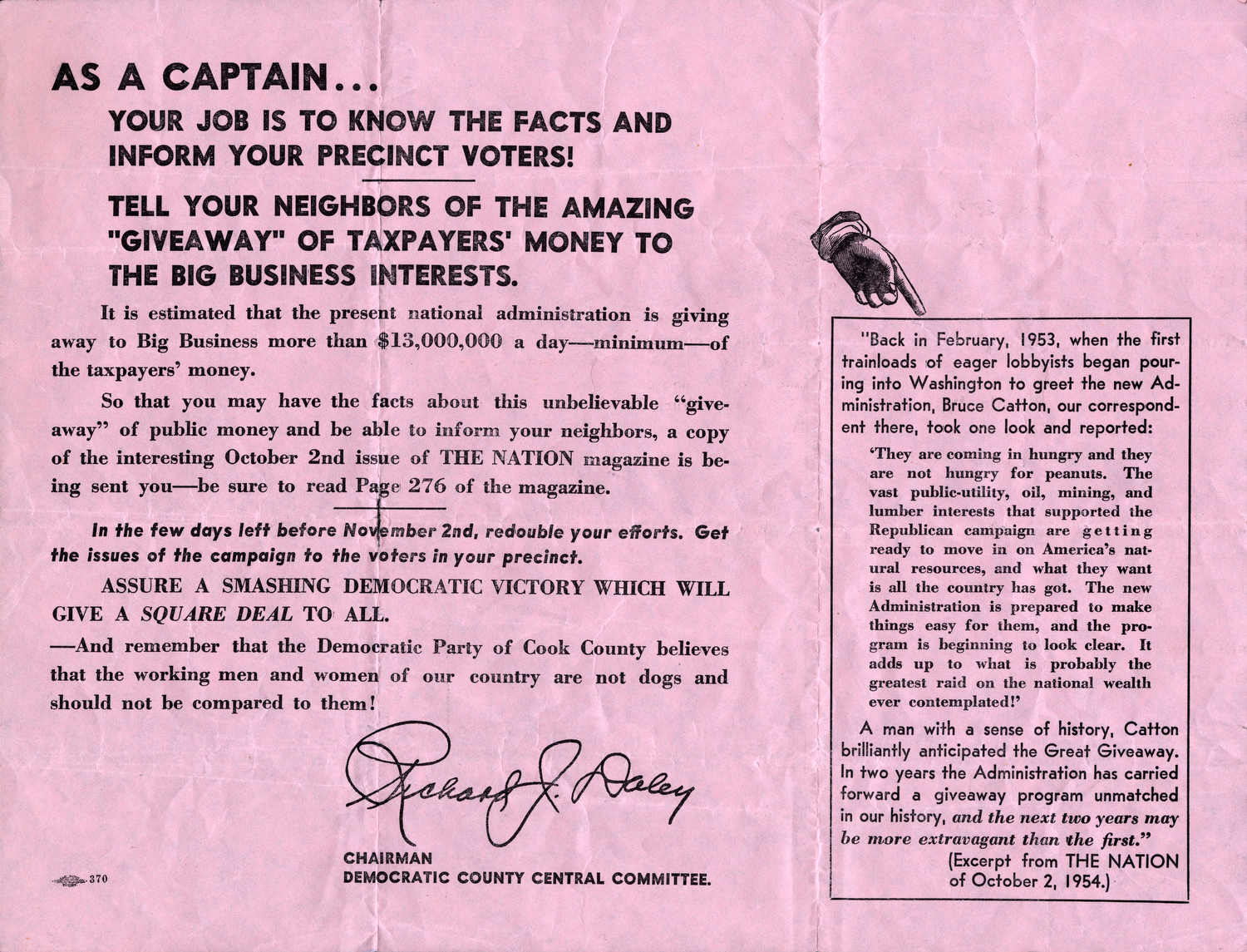
img: [This flyer informs precinct captains of their responsibilities, 1954. RJD_02_01_0022_0009_003]
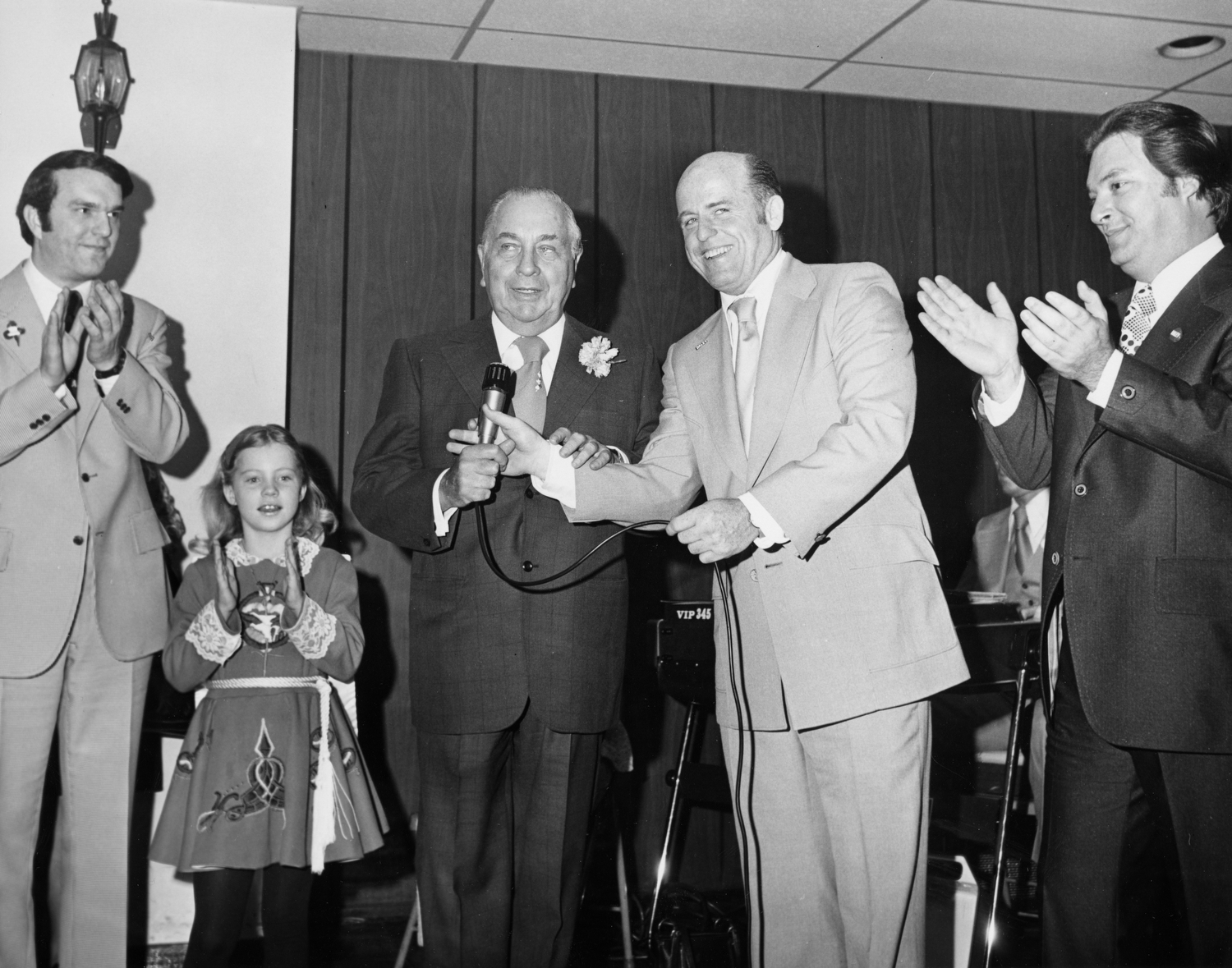
img: [Richard J. Daley speaking at 47th Ward rally, ca. 1971. Photo: Bud Bertog. RJD_04_01_0033_0010_001]
He’d go out to his ward meetings on Saturday mornings; he’d have two hundred precinct captains at 37th and Halsted at the 11th Ward. And we’d pull up on the corner there. And the precinct captains would come up and say “Mr. Mayor, can you help Joe? His son needs a job.” And the mayor would say, “Have him call so and so. We’d be glad to help him out.”
Vince Gavin, Security Chief for Richard J. Daley, interview excerpt, July 19, 2014
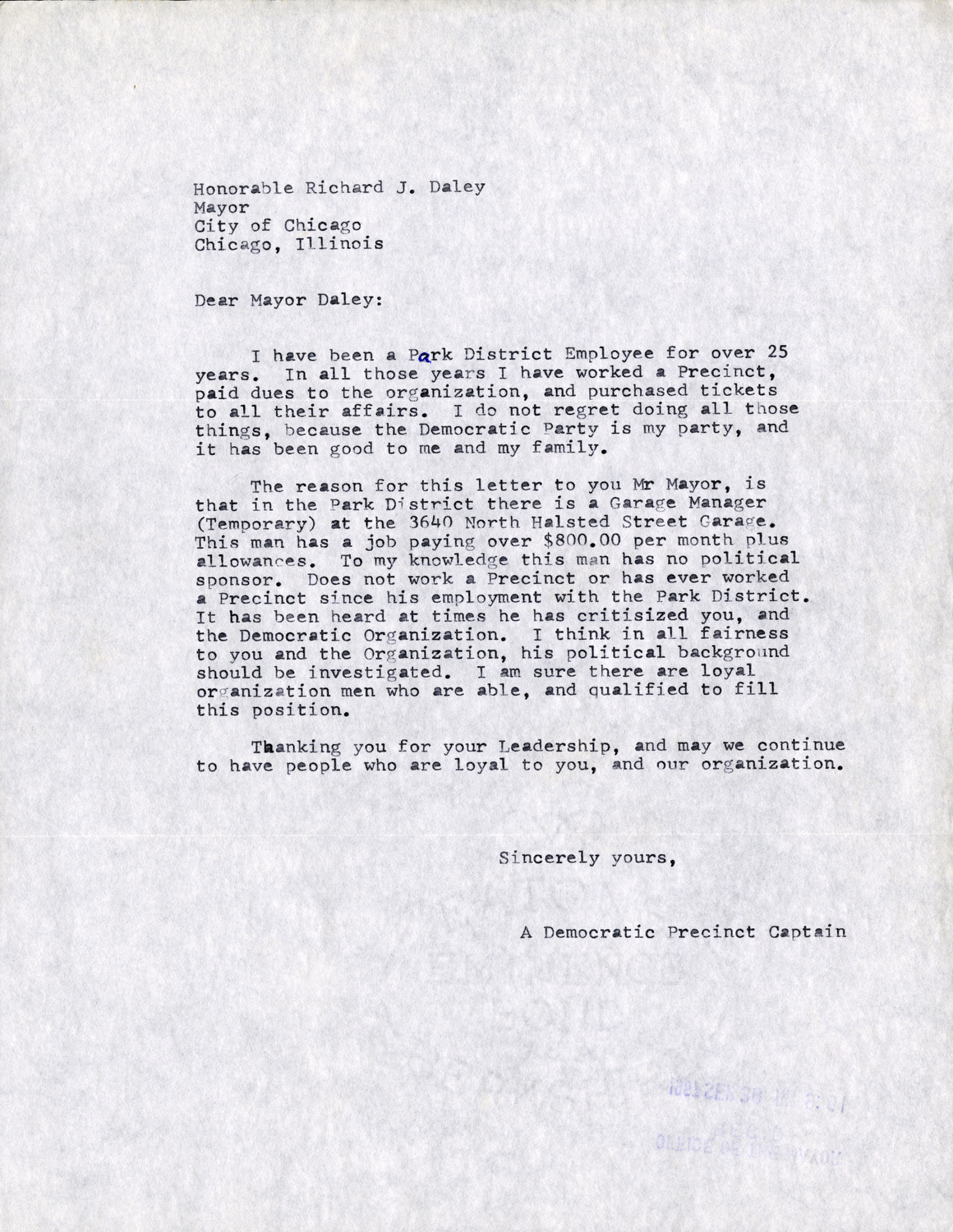
img: [Letter from "A Democratic Precinct Captain," September 1967. RJD_01_01_0058_0004_015]He wanted to run the show. Of course, the organizations were strong then. We had a patronage system.
Burton Natarus, interview excerpt, June 16, 2010
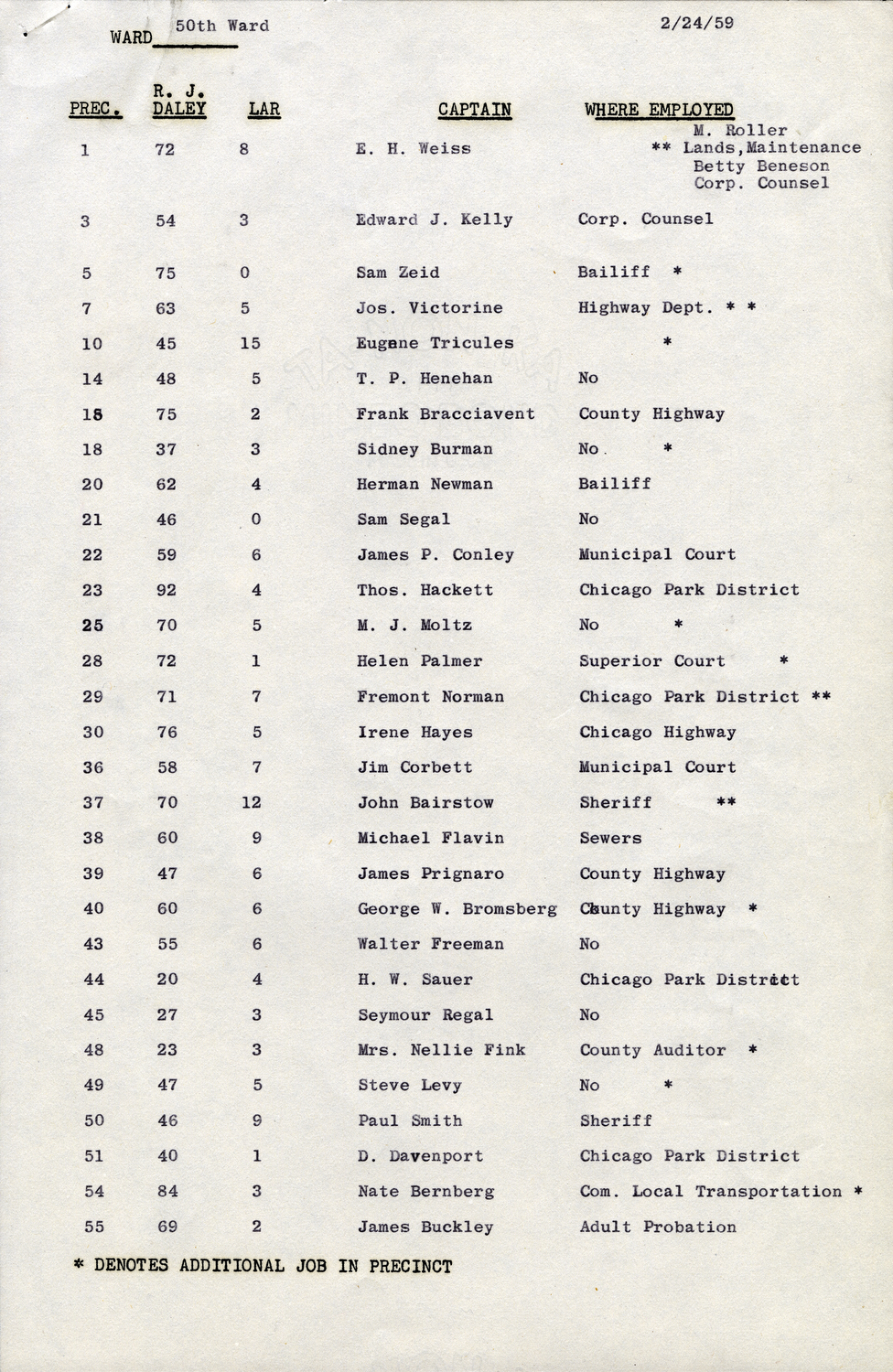
img: [List of 50th ward precinct captains and where they were employed, February 24, 1959. RJD_02_01_0034_0027_002]
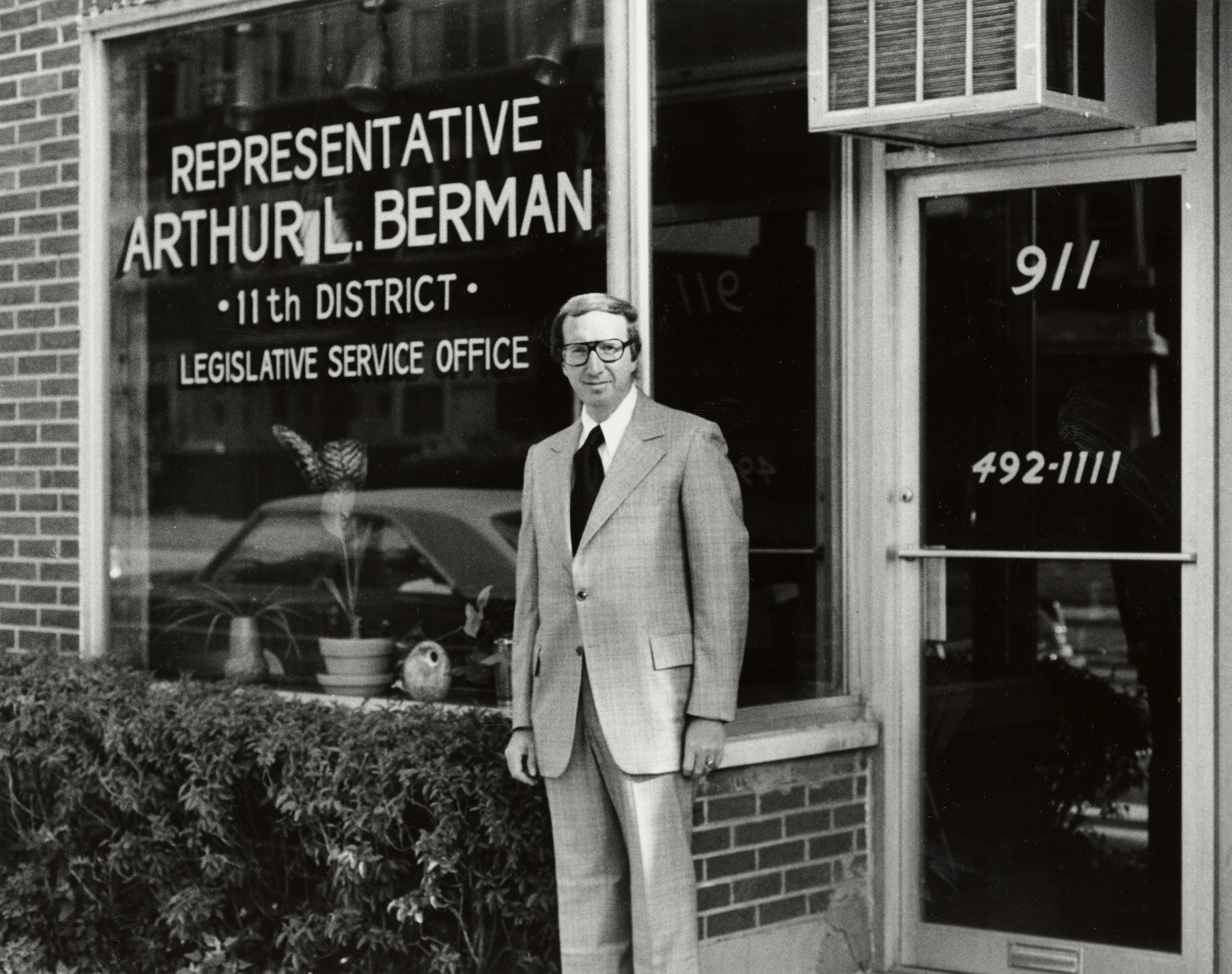
img: [After serving as a precinct captain, Arthur Berman ran and won election as a state representative in 1969 at the age of twenty. This photo shows him outside his legislative office in Evanston, 1976. RJD_04_01_0037_0004_001]Now keep in mind, at that time I hadn’t even started law school yet. I was walking out. And in great Chicago political style, as I was walking away ready to become a precinct captain, Mr. Huppert said, “And Art, do a good job. I’ll make you a judge.”
Arthur Berman, Illinois Legislator, interview excerpt, October 8, 2003
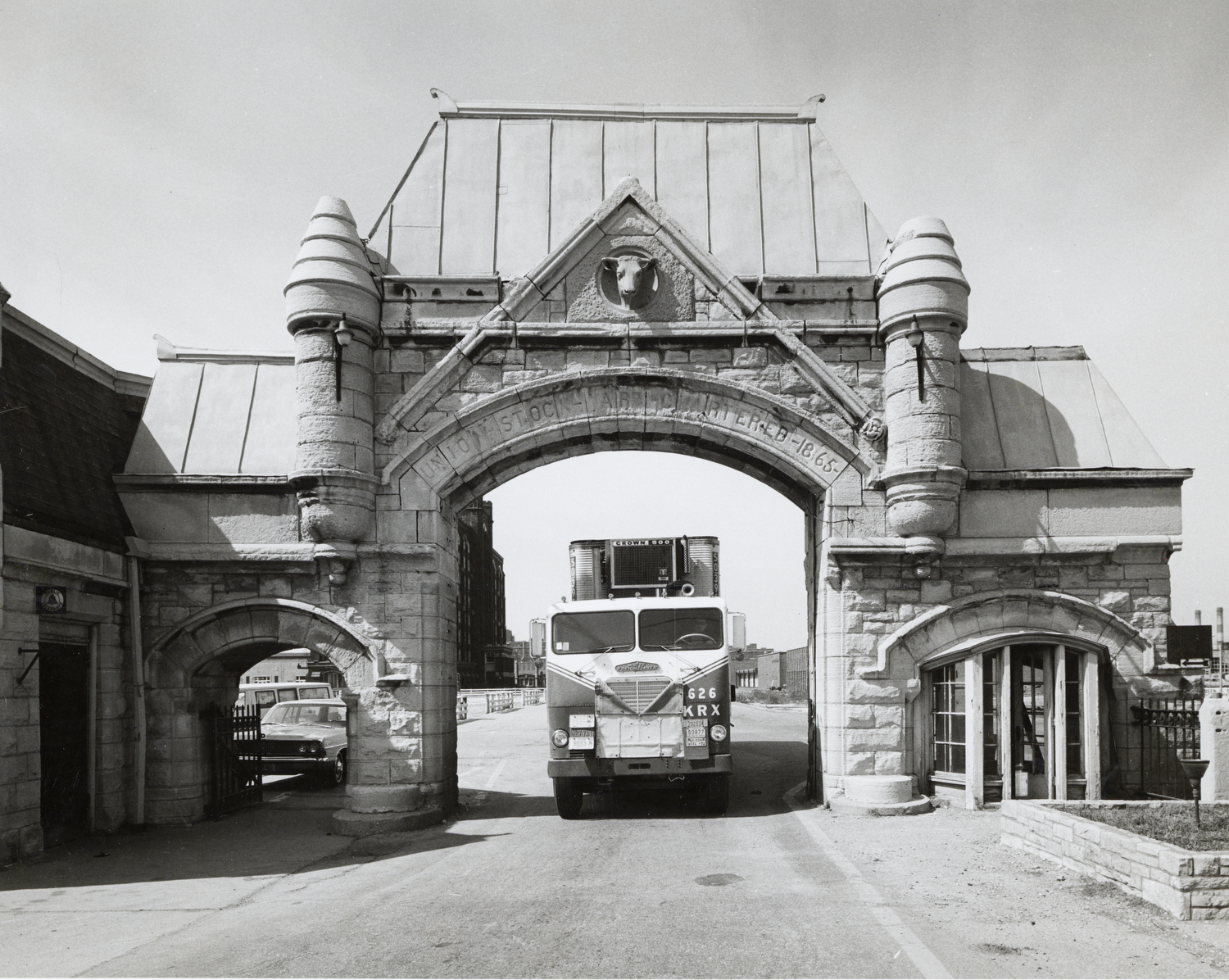
img: [Truck traveling through the gate of the Union Stock Yard, 1972. RJD_04_01_0033_0014_002]He knew that I wasn’t a registered Democrat. And this was probably a good year or so that I’d been working there. He’d approved my hiring and all that. It never got into anything political. It’s amazing.
Marshall Suloway, Chief Engineer City of Chicago, interview excerpt, August 11, 2003
By the late 1970s, new federal and state laws and court decisions had curtailed the patronage system. But one colleague, looking back on the era, believed that such revisions worked best when balanced against the need for responsive government.I do remember specifically one case of a family over on 51st Street in the Back of the Yards, where the only breadwinner in the family was a worker in the stockyards, and he cut his hand off on a saw in a meatpacking plant. I called Tom Donovan and within a couple of days a brother in the family was working for the city and keeping that little family together. But there are thousands of those stories. It was just a different time and a different city. I know there’s a lot of criticism about the abuses of the political patronage system, but in truth there were a lot of families that benefited from the ability to access work of some kind.
Ed Burke, Alderman, interview excerpt, August 5, 2014
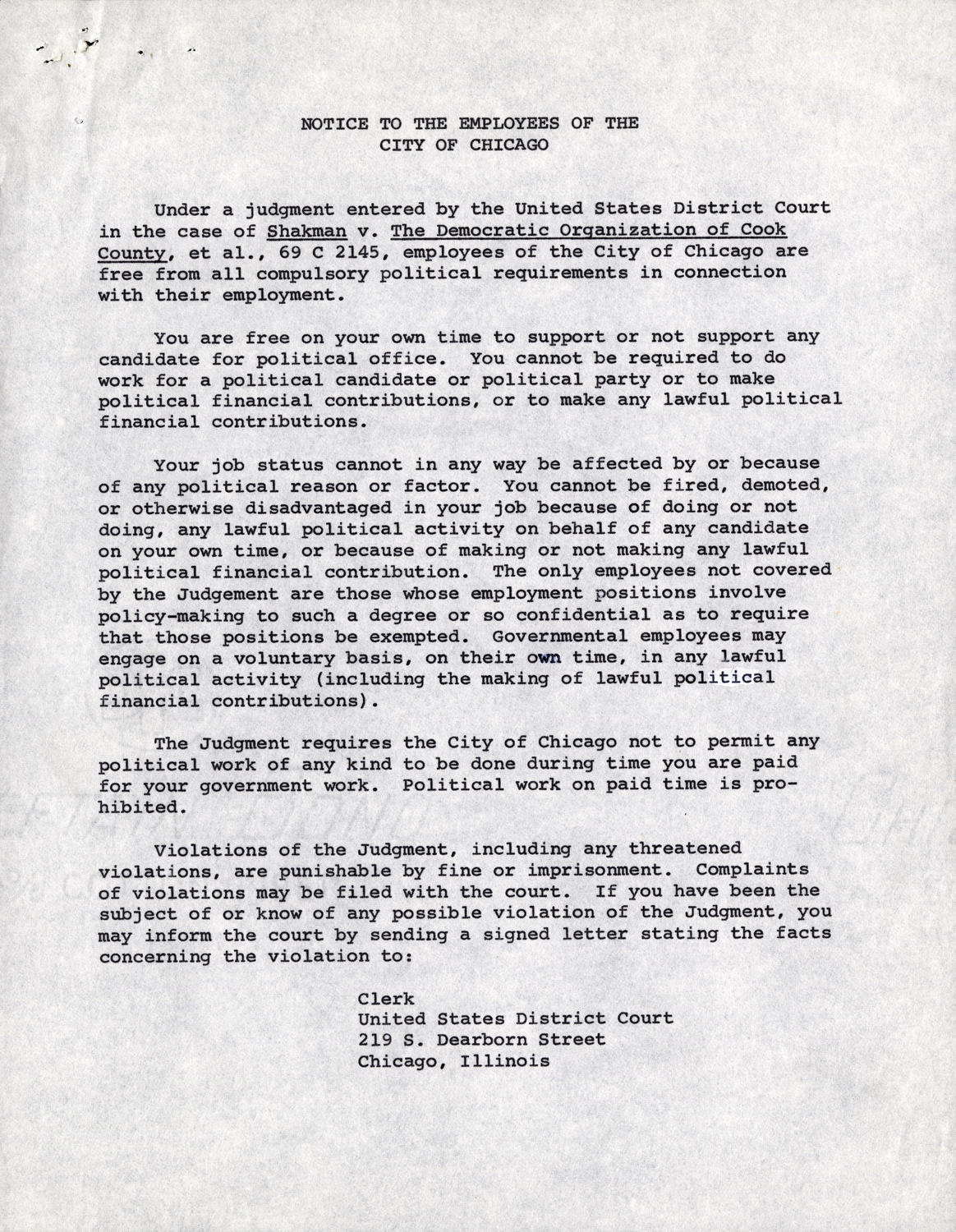
img: [Notice informing city employees that as a result of the Shakman decree, there are no longer any political requirements for their jobs. RJD_01_01_0145_0008_004]
This page has paths:
This page references:
- A Democratic precinct captain writes about loyalty in politics, 1967
- A notice about the Shakman decree, circa 1972
- Jimmy Carter on political hiring under Mayor Daley
- Interview transcript: Arthur Berman, October 8, 2003
- Interview transcript: Burton Natarus, June 16, 2010
- Interview transcript: Ed Burke, August 5, 2014
- Interview transcript: Marshall Suloway, August 11, 2003
- Interview transcript: Vince Gavin, June 19, 2014
- Jimmy Carter on loyalty in politics and city services
- Thomas Donovan on loyalty in politics under Mayor Daley
- Richard Durbin reflects on loyalty in politics
- Ray Simon on loyalty in politics
- Arthur Berman outside his legislative office in Evanston, Illinois, 1976
- Mayor Daley at 47th ward rally, circa 1971
- Chicago's Union Stock Yard, 1972
- List of 50th ward precinct captains, 1959
- A flyer lists precinct captains' responsibilities, 1954
- Charles Pounian on Chicago personnel policies under Mayor Daley