Race, Housing, and Poverty
But black Chicagoans also found widespread discrimination. “Redlining” and other practices shunted blacks into small, overcrowded ghettos on the city’s south and west sides. Black residents believed they did not enjoy the services and opportunities available to white Chicagoans. This de facto segregation, along with the related issues of poverty, proved difficult to resolve.
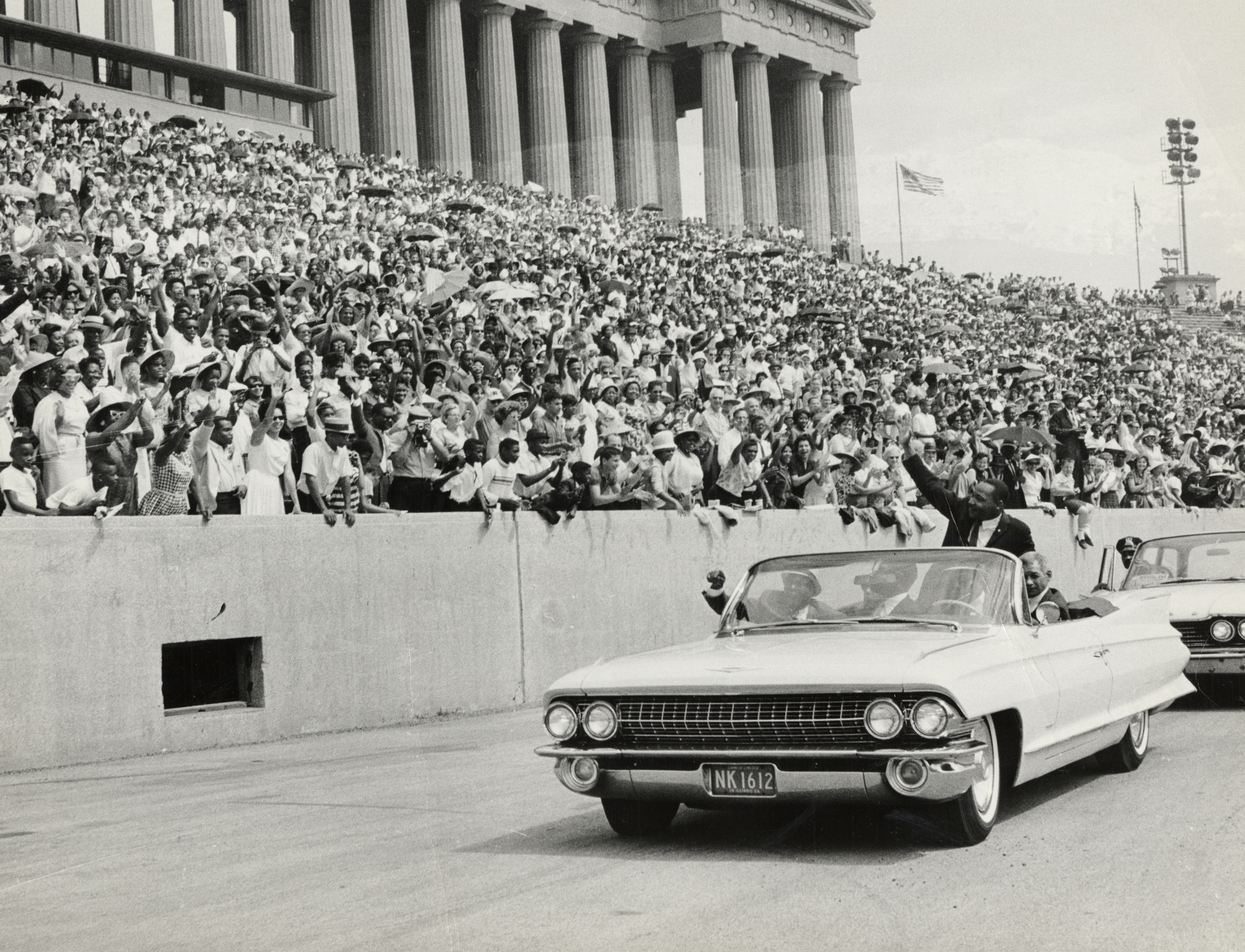
img: [Reverend Martin Luther King, Jr. at a Chicago Freedom Movement rally in Soldier Field, July 10, 1966. CULR_04_0194_2204_004]
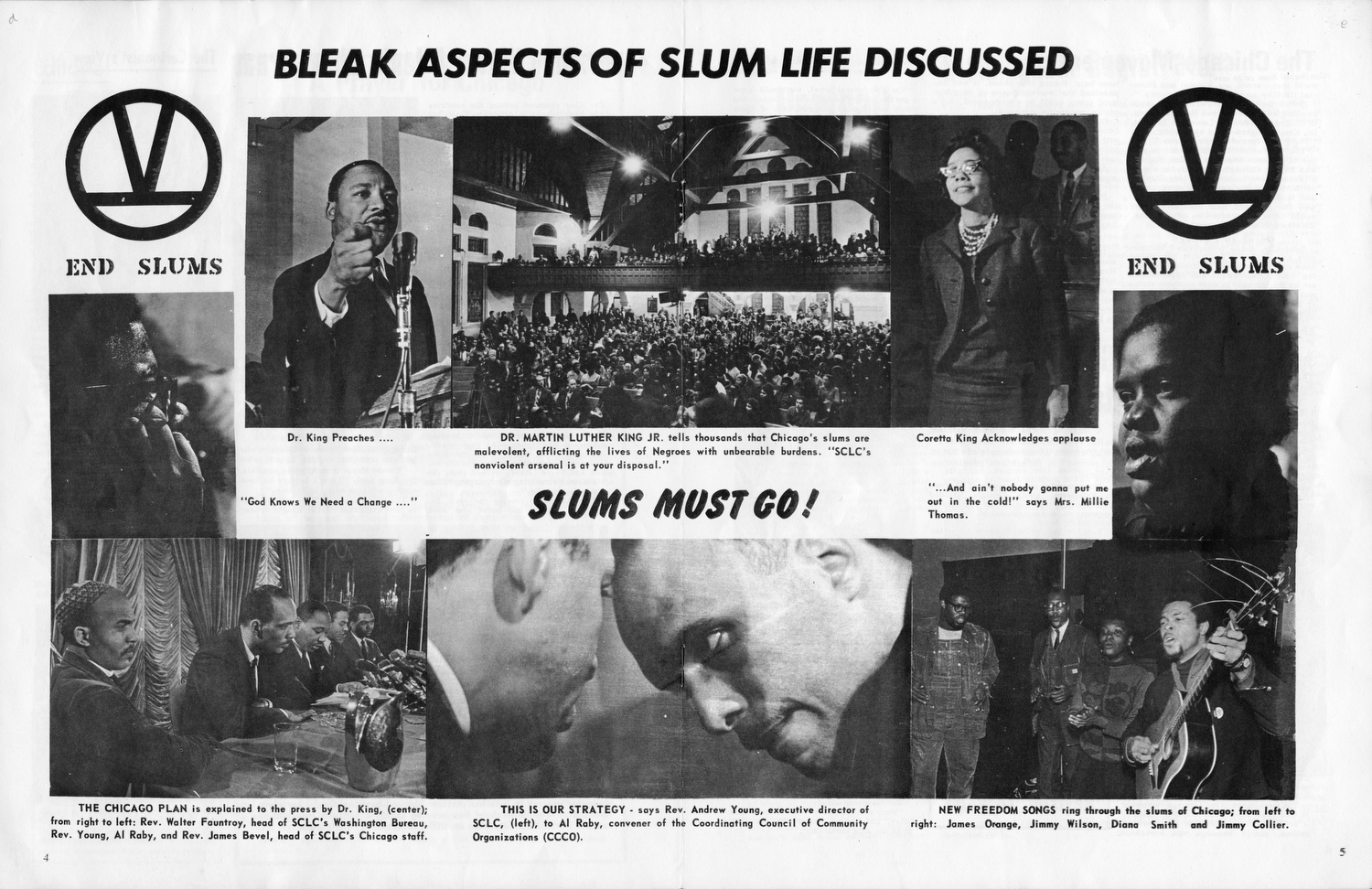
In 1966, Dr. Martin Luther King Jr. and his colleagues came to Chicago to work with other likeminded activists to improve the conditions of urban slums, end housing discrimination, and expand access to public schooling.
img: [Inside pages of Southern Christian Leadership Conference Newsletter, vol. III, no. 1, January-February, 1966. BHC_0001_0014_003_001de]
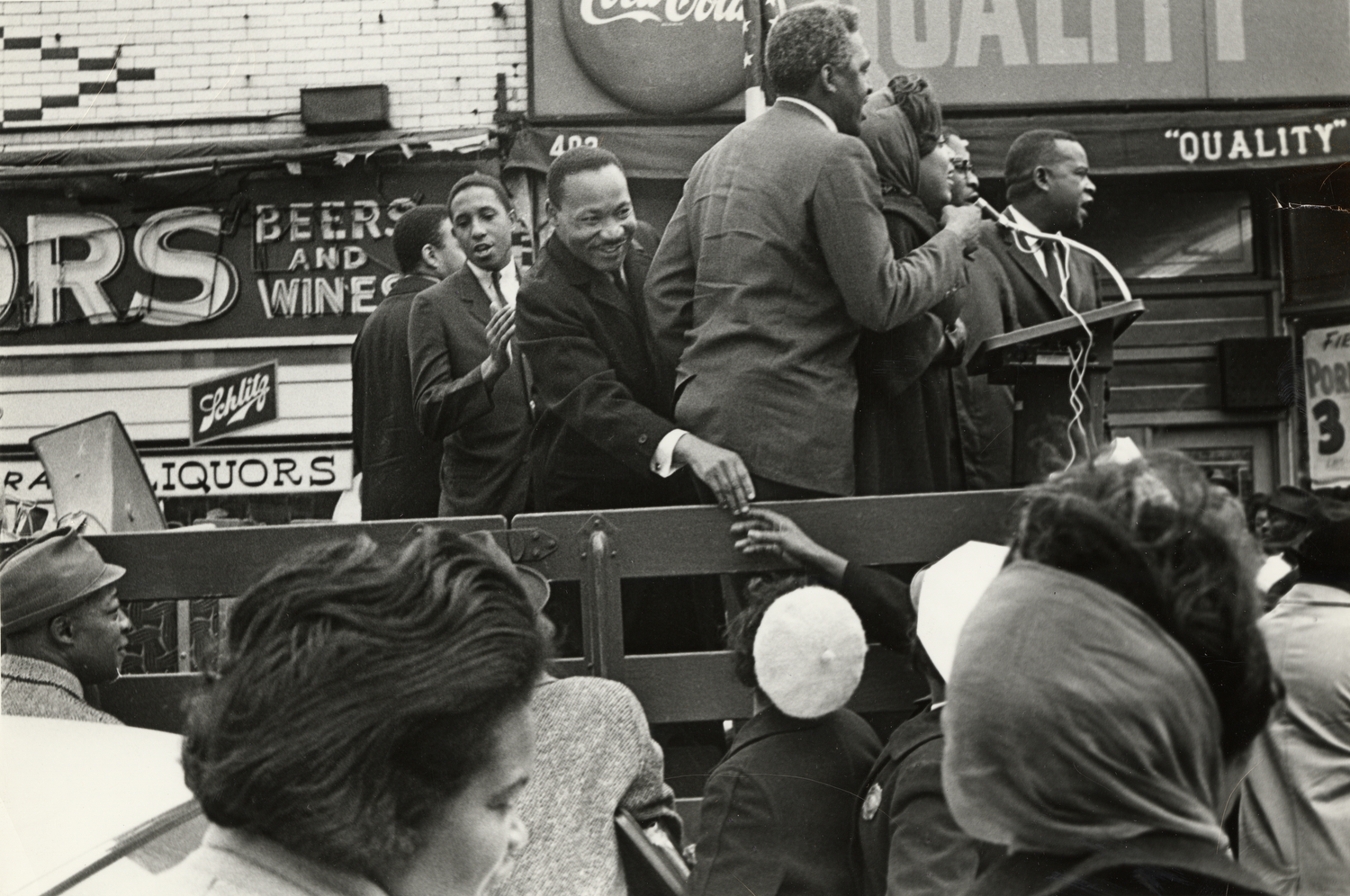
img: [Reverend Martin Luther King, Jr. greeting people from the back of a truck, ca. 1966. CULR_04_0192_2179.a_001]I was at the mayor’s office when Dr. King came in. What surprised me the most was – first, the room was filled with ministers, elected officials, his aides, and department heads, and people were talking – but when Dr. King came in, the silence he brought into that room and the command. And he was not a tall man. I was shocked, but I remember the quietness. As soon as he entered the room, it became quiet. And then he sat right across from my dad. They discussed the problems in the city that he came to address. And he said, “Dr. King, we’re willing to work with you, we will work this out.” And they came up with a plan, my dad and him. They announced it.
John Daley, son of Richard J. Daley, interview excerpt, May 9, 2007
Some steps the mayor took to address poverty and housing shortages were controversial, particularly the decision to use federal money to build high-rise public housing.It was a tough period in the ‘60s with the open housing marches in the middle 1960s. You had Dr. Martin Luther King, Jr. marching on the southwest side, and the mayor was largely responsible for helping to develop the agreement that provided for open housing.
James O’Connor, Executive at Commonwealth Edison, interview excerpt, July 22, 2014
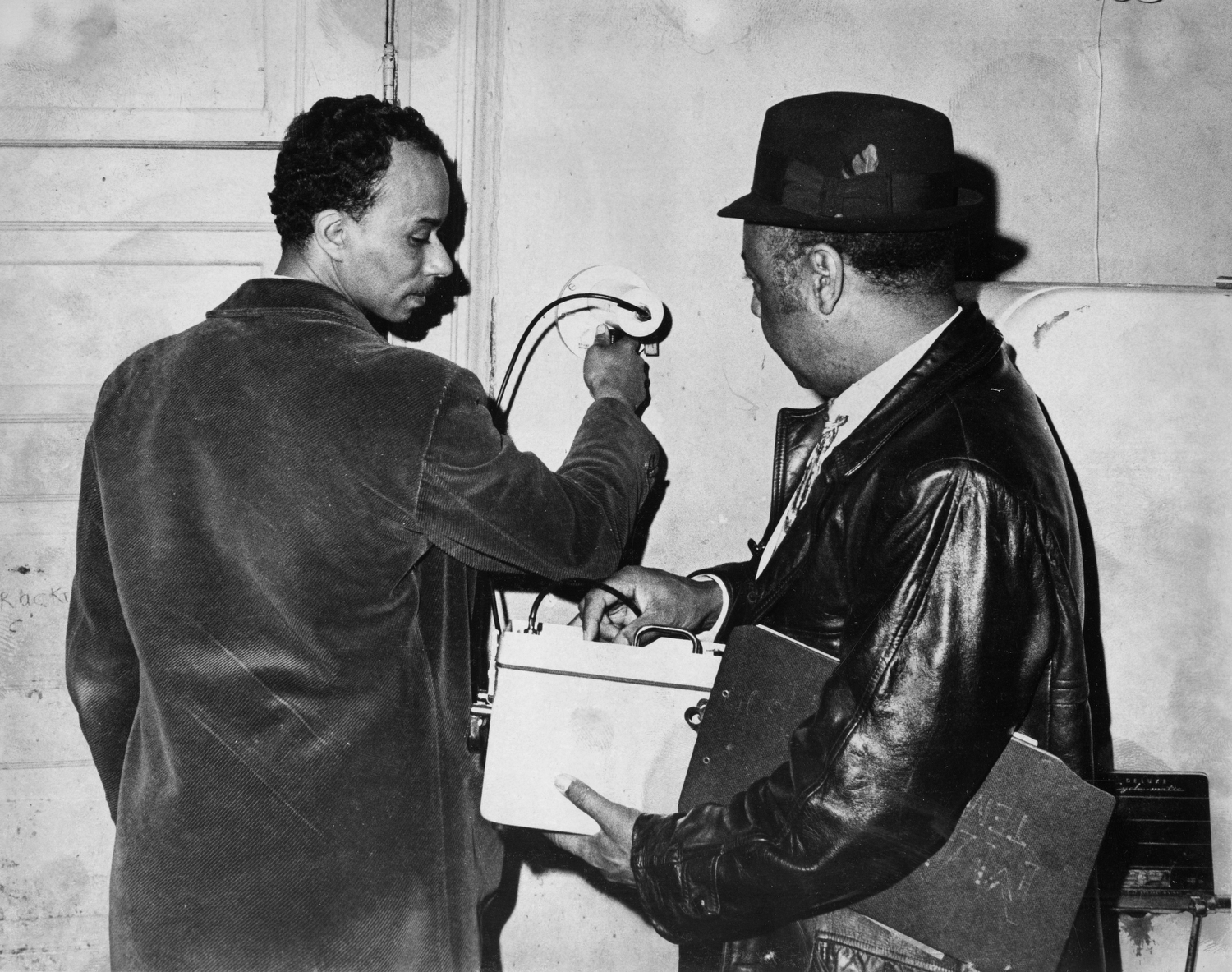
img: [Two men inspect wiring in an apartment at 1611 S. Ridgeway in the Lawndale neighborhood, 1971. RJD_04_01_0033_0002_017B]
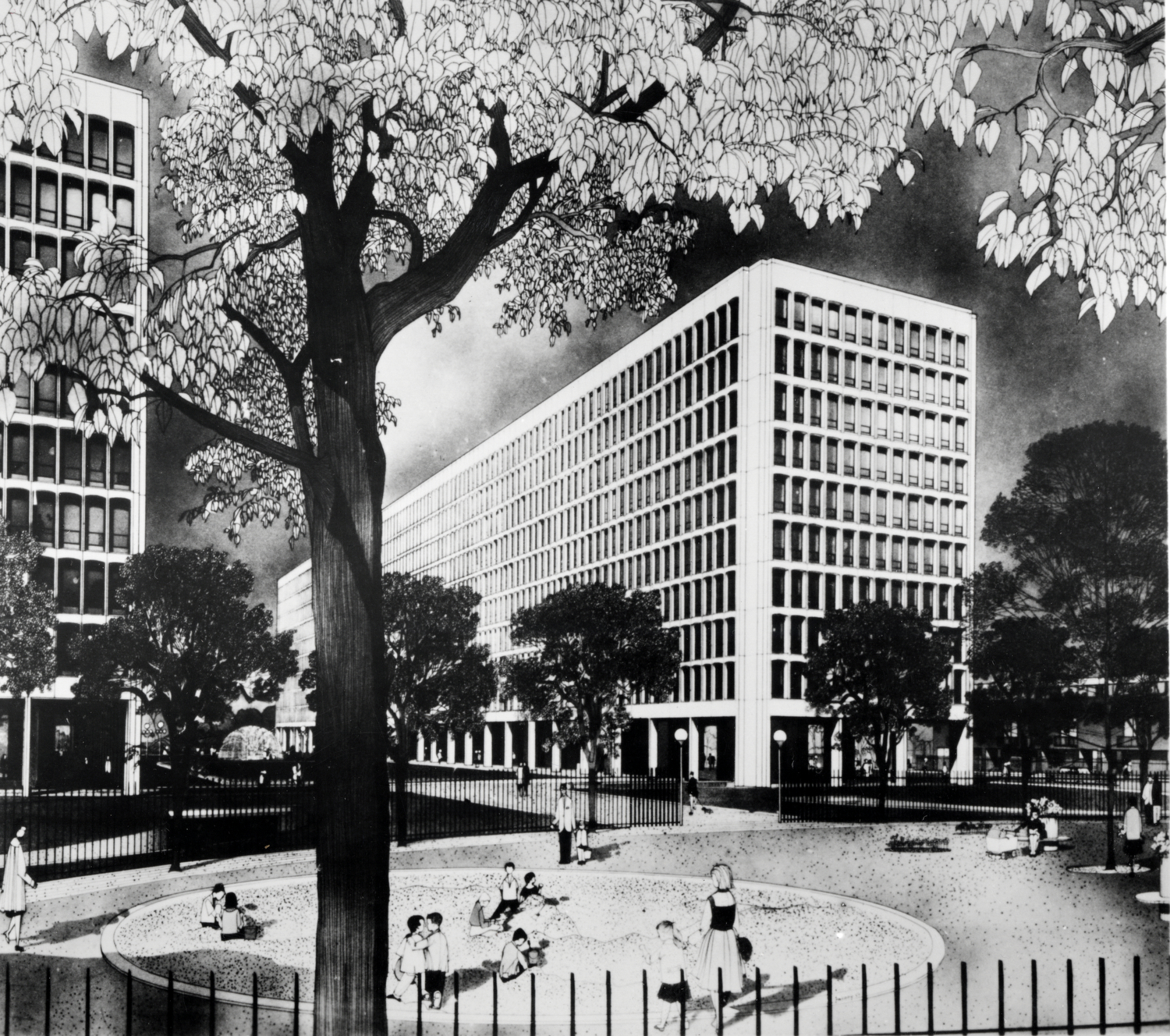
img: [An architect’s rendering of proposed public housing at 1555-60 N. Sandburg Terrace, 1971. Photo: Bill Engdahl, Hedrich-Blessing. RJD_04_01_0033_0002_018c]And so I think his inspiration initially on public housing might have been right, to get people into new, in those days, new dwellings, even high-rise public housing. But also it was to make sure that the black and white problem was going to be contained within certain areas. As that public housing disintegrated, you could tell this was not the answer.
Richard J. Durbin, United States Senator, interview excerpt, September 8, 2014
I think that he was against high-rise housing all of the time. He didn’t think that the high-rise housing was a good idea.
Newton Minow, Chair of Federal Communications Commission 1961-1963, interview excerpt, October 2, 2003
The ones that bothered him were the high-rise public housing. He said, “Father, we had this problem and we went to the experts to ask what to do. And they told us to build these high-rise things. It was the biggest mistake I ever made. We would just pile a slum on a slum. And they were just terrible.” But that bothered him tremendously. But he said, “We didn’t know any better.” And most of them are gone now.
Father Gilbert Graham, Daley Family Friend, interview excerpt, November 17, 2003
This page has paths:
This page references:
- Interview transcript: Richard J. Durbin, September 8, 2014
- Interview transcript: John Daley, May 9, 2007
- Andrew Young on Mayor Daley, Mahalia Jackson, and Martin Luther King Jr.
- Architect's rendering of a proposed public housing, 1971
- Interview transcript: Gilbert Graham, November 17, 2003
- Interview transcript: James O'Connor, July 22, 2014
- Interview transcript: Newton Minow, October 2, 2003
- Inspecting apartment wiring in Lawndale neighborhood, 1971
- Martin Luther King Jr. at Chicago Freedom Movement rally, 1966
- Martin Luther King Jr greets supporters, circa 1966
- Southern Christian Leadership Conference Newsletter
- Michael Daley on high-rise publich housing in Chicago
- Groundbreaking for Lake Grove Village apartments, 1971
- James Compton on Mayor Daley and race relations